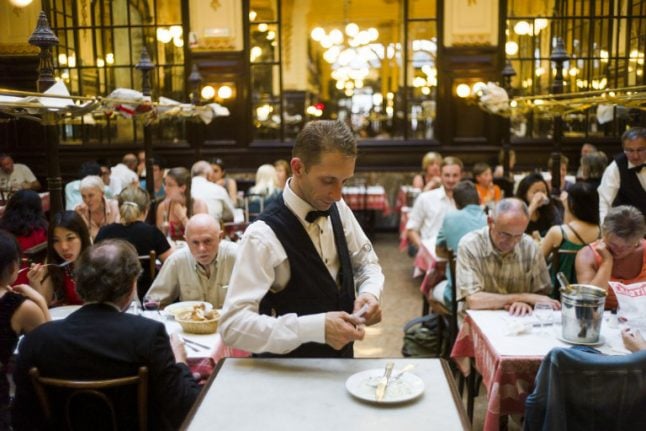
With many of you visiting Paris for a few days before coming down to Provence, we thought this post appropriate as you're more likely to end up in a slightly more upscale restaurant for dinner in Paris than you would in the more relaxed & casual bistro & cafe environments of Provence.
Entering a busy restaurant in Paris can be an intimidating experience for first-time visitors, or even for those who've lived there for years.
1. Greetings are crucial
Always greet the head waiter with a hearty bonjour and a smile at lunch time or bonsoir at dinner time. While you may have heard that French waiters are rude, an enthusiastic bonjour on your part will go far to set the stage for cordiality. This may sound overly simplistic, but the same also applies for starting a conversation with anyone, anywhere in France. Our number one piece of advice for our guests is: "A little Bonjour goes a long way!"
2. Don’t expect the waiter to fawn over you
French waiters leave their customers alone to enjoy their meal. They rarely return every few minutes to ask “Is everything OK?” as American waiters so often do. This is not because they're trying to ignore you, but more because in European culture, people prefer to have less interruptions... and because waiters are not "working for tips" as they do in the US, they don't feel the need to hover over your table... (learn that this isn't better or worse... it's just the difference in cultures)
3. Don't feel rushed
Relax and enjoy the food and conversation. Consider enjoying a glass of wine before ordering... The experience should be so much more than just eating... The waiter won’t rush you from one course to the next. The French typically eat slower and enjoy conversation with their meal…lots of it. They generally don’t rush to the next course or rush to get out of the restaurant. They also enjoy the presentation of the dishes – the way the food is organized on the plate. And they enjoy sipping wine with their meal and commenting on the aromas emanating from the glass.
4. How to call your waiter to the table.
To attract the attention of your waiter or waitress just raise your arm and politely call out 's'il vous plait'. (please)
5. How to signal the waiter that you're finished

6. Getting the check
Be aware that servers will almost never bring you the check without your asking for it, as it is considered rude to do so in France. Check, please?: L'addition, s'il vous plaît? (Lah-dee-sy-ohn, seel voo pleh?)
7. There's no need to leave a huge tip
… unless the service was truly outstanding. In France, the waiter's service charge is included in the bill and the French don't feel compelled to leave a tip. If your service was outstanding, or if you simply want to reward the waiter with a gesture of your appreciation, a 5 percent tip is appropriate.
